

By Flata Kavinga
Government has directed that all major industrial projects across Zimbabwe include the construction of power generation facilities as part of efforts to address energy shortages and drive provincial development, a senior official has said.
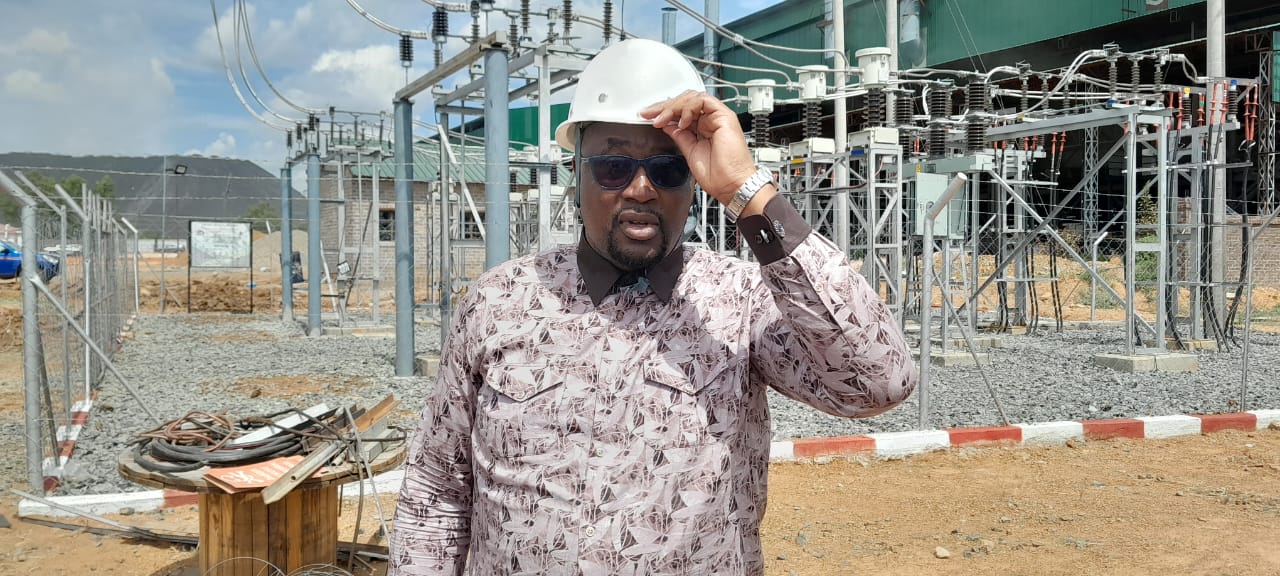
Presidential Affairs and Devolution Permanent Secretary Engineer Tafadzwa Muguti told journalists on the sidelines of a tour of the Global Union Thermal Power Station in Kwekwe that the move is in line with the country’s devolution agenda being championed under President Emmerson Mnangagwa.
“We have said that across all provinces, any large industrial project which is happening should come with a power station,” Muguti said. “We are following up as the Office of the President and Cabinet to ensure that everyone who is industrialising in the provinces is also going to build power plants.”
He said the policy aims to reduce pressure on existing national power sources and ensure energy security at provincial level.
Zimbabwe has faced persistent electricity shortages in recent years, largely relying on generation from Hwange Power Station and imports to meet demand.
Muguti said decentralising power generation would diversify supply sources and support economic growth in resource-rich regions.
“At the moment, energy is not only going to be sourced from Hwange. With the devolved agenda, provinces must utilise their own endowments,” he said.
During the tour, Muguti highlighted ongoing and planned projects in Kwekwe, including a 70-megawatt thermal power plant currently under development, as well as a proposed additional 100-megawatt facility within the district.
He said the plants would be powered by coal transported from Sengwa, tapping into Zimbabwe’s significant coal reserves.
“Zimbabwe is sitting on one of the largest coal deposits on the continent. We should not be struggling for power,” Muguti said.
He also noted that new technologies being deployed at the Global Union Thermal Power Station are expected to significantly reduce water usage.
“The power station we are seeing here uses up to 90 percent less water compared to conventional systems,” he said, adding that water consumption had been reduced from about 2,000 megalitres to approximately 200 megalitres.
To support the projects, Muguti said complementary infrastructure, including water supply systems, would be developed.
A pipeline from Sebakwe Dam is expected to be constructed to service the power plants.
“Wherever there is a mega industrial project, there also has to be water infrastructure,” he said.
Muguti expressed optimism that the developments could stabilise electricity supply in Kwekwe within the next 12 to 14 months, potentially reducing power outages in the district.
He said central government would continue to provide policy direction, while provincial authorities would be responsible for identifying local resources and implementing development plans in coordination with districts and local authorities.
“The role of central government is policy and strategic direction, while provinces must deliver solutions based on their endowments,” Muguti said.