

Staff Reporter
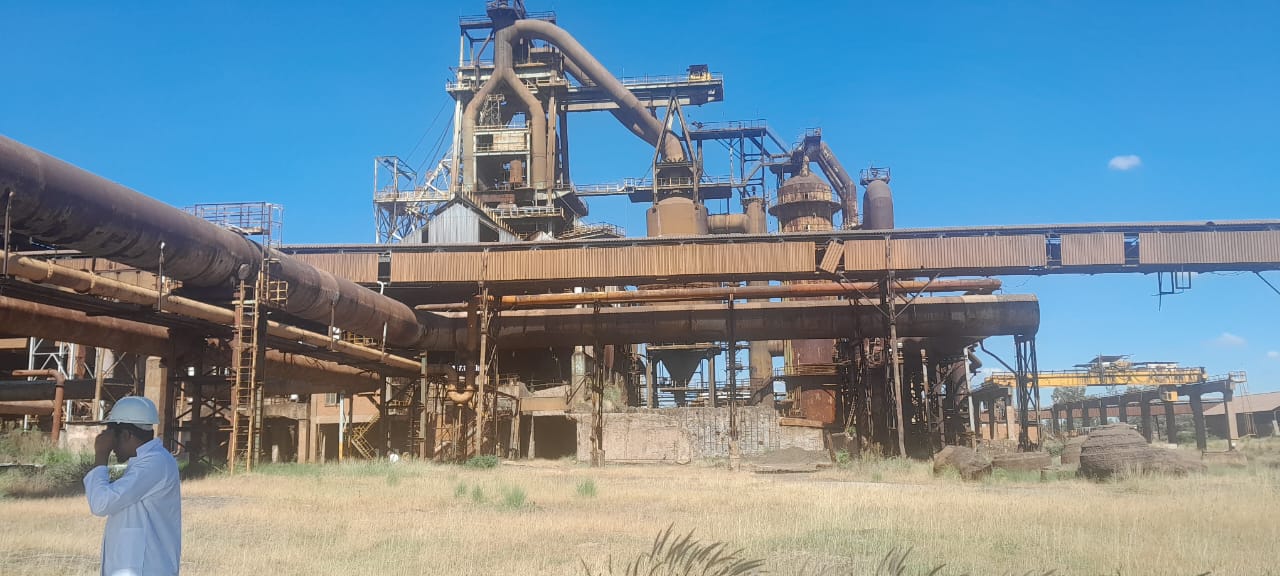
The Zimbabwe Iron and Steel Company Limited (Ziscosteel) is burdened with financial liabilities amounting to US$23 286 759 as of the first quarter of 2026, Acting group chief executive officer Izekiel Machingambi told the Parliamentary Public Accounts Committee the state of affairs during its tour of the defunct steel giant.
Addressing legislators, Machingambi said the company’s debt has continued to grow in the absence of operations and working capital, warning that further delays in reviving production would worsen the situation.
“Since 2017, when Zisco debt was assumed by Treasury, from 2017 to date, our debt is sitting at US$23 million. The longer we take to operationalise Zisco, the more we sink in debt,” he said.
The Parliamentary Public Accounts Committee, an oversight body of Parliament of Zimbabwe, toured the company to assess its operational status and prospects for revival.
Machingambi attributed the firm’s financial distress to prolonged inactivity, lack of investment, and failed deals with previous investors, including Essar Africa Holdings and R&F China.
He said Ziscosteel has not received working capital since 2008, resulting in deteriorating infrastructure and idle plants.
“The company is going into long-term idleness. When you walk around, you see rusting plants and roofs blown off by the elements. This is because of inactivity,” he said.
Despite the challenges, Machingambi outlined a phased approach to reviving operations, starting with restoring basic production capacity before undertaking full modernisation.
“Our immediate focus is to refurbish key units such as the foundry, limestone plants, kilns, coke batteries and by-product plants. Phase one is about kick-starting operations and producing for the market. Modernisation will come later,” he said.
He highlighted plans to rebuild the steel value chain through strategic partnerships with local and regional players, including Hwange Colliery Company Limited for coke production inputs and Dinson Iron and Steel Company for supply of pig iron and billets.
Machingambi said downstream industries such as Lancashire Steel would also be revived to process finished products, while Zimchem Refiners could expand production of chemical by-products such as tar and ammonia.
He added that collaboration with Dinson’s Manhize plant could also support skills development, with trainees using Ziscosteel’s facilities for theoretical training and gaining practical experience at the operational plant.
Looking ahead, Machingambi said the company was exploring export opportunities to improve viability, citing initial inquiries for foundry products from Zambia.
“We believe if we can access regional markets, it will significantly improve our prospects as a group,” he said.
Ziscosteel, once the backbone of Zimbabwe’s heavy industry, has been largely dormant for over a decade. Government, through its investment vehicle Mutapa Investment Fund, has recently renewed efforts to resuscitate the company as part of broader industrial recovery initiatives.
Machingambi said the renewed shareholder support could help “stem the tide” of decline and place the company on a path to recovery, although significant funding and sustained investment would be required to restore operations.