

By Flata Kavinga
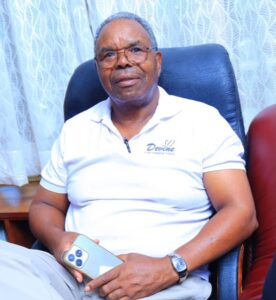
Energy and Power Development Minister July Moyo has called for increased private-sector investment in Zimbabwe’s battery manufacturing industry, saying the country’s lithium processing capacity presents an opportunity to develop a domestic battery value chain.
Moyo said Zimbabwe’s processing of lithium ore into lithium sulphate positioned the country to move towards battery manufacturing, in line with government’s policy of promoting mineral beneficiation and value addition.
Addressing delegates during the ninth session of the International Solar Alliance (ISA) Assembly in New Delhi, India, Moyo urged investors and development partners to support the development of the battery industry as part of efforts to strengthen energy security and accelerate renewable energy deployment.
“Zimbabwe is the only African country which has started processing lithium ore to lithium sulphate, which presents opportunities for scaling up to battery manufacturing,” he said.
“In this regard, we call on the private sector to participate in the battery value chain and manufacturing. This is in line with the country’s policy on beneficiation and value addition of all natural resources, including minerals.”
The minister said stronger cooperation with ISA could help Zimbabwe mobilise investment, build technical capacity and develop the industrial capabilities required to support its renewable energy ambitions.
He said Zimbabwe and ISA had strengthened their partnership through the signing of a Country Partnership Framework (CPF) agreement in August 2026 during the alliance’s Africa Regional Committee meeting in Victoria Falls.
The framework provides for cooperation in areas including agricultural solarisation, policy development, capacity building and the sharing of best practices.
Moyo said the partnership had also been enhanced through the launch of the Solar Technology Application Resource Centre (STAR-C), which will be based at Chinhoyi University of Technology.
The centre is expected to support solar skills development, standards development, equipment testing, research, innovation and technology awareness.
He called for a focused implementation roadmap for the partnership framework, with clearly defined projects, financing arrangements, institutional responsibilities and timelines.
Moyo said Zimbabwe’s cooperation with ISA should translate into measurable development outcomes, including increased investment, electricity generation capacity, job creation and the growth of productive enterprises.
He said the country remained committed to working with ISA and other partners to turn its renewable energy ambitions into tangible economic development outcomes.