

By Flata Kavinga
Zimbabwe is targeting to increase its installed renewable energy capacity to 2,640 megawatts (MW) by 2030 from 1,282MW in 2025, as government steps up efforts to strengthen energy security, diversify electricity generation and attract private-sector investment.
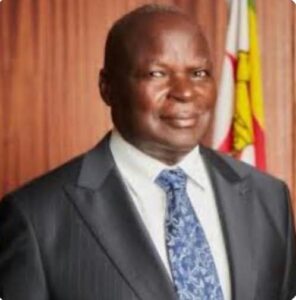
Energy and Power Development Minister July Moyo said the target would see renewable energy account for approximately 49 percent of the country’s total electricity supply, with solar expected to contribute significantly to the additional generation capacity.
Addressing delegates during the ninth session of the International Solar Alliance (ISA) Assembly in New Delhi, India, Moyo said Zimbabwe was looking to deepen its partnership with the organisation to advance national development priorities, improve access to electricity and support sustainable economic growth.
He said decentralised solar energy would be critical in helping the country achieve universal energy access by 2030, from the current level of 62 percent.
“Zimbabwe attaches great importance to its partnership with the International Solar Alliance as a strategic vehicle for advancing energy security, sustainable economic development and universal access to modern energy,” he said.
Moyo said government was pursuing renewable energy development through the National Renewable Energy Policy, National Development Strategy 2 (NDS2) and the country’s Energy Compact.
He said government was also introducing incentives to attract private-sector developers into the renewable energy sector, including net metering, duty exemptions on solar equipment and batteries and prescribed asset status to mobilise funding from local pension funds.
Government is also providing project support agreements to reduce investment risks for qualifying renewable energy projects.
Moyo identified affordable financing, expansion of solar generation and energy storage, rural electrification, solar-powered agriculture and irrigation, improved regulatory frameworks and development of local technical and industrial capabilities as key areas for cooperation with ISA.
On rural electrification, he said government had launched the Presidential Solarisation Programme, which targets the installation of 1,2 million decentralised solar units by 2030, benefiting 200 000 households annually.
The programme is expected to cover half of the country’s rural households.
He said the Rural Electrification Fund had also identified sites for up to 440 solar mini-grids, with feasibility studies completed for 100 projects.
To date, 66 solar mini-grids, with capacities ranging from 60 kilowatts to 220 kilowatts, had been deployed, while additional projects were underway.
Moyo said government was also integrating solar energy into its national borehole drilling programme, which targets more than 35 000 villages.
Each borehole is expected to have a solar-powered water pump, provide water for at least one hectare of land and supply clean water to surrounding communities.
He said the initiative, alongside village and school business units, was intended to promote productive use of energy, support irrigation and strengthen the link between water, food and energy security.
Government is also targeting to electrify all rural schools, clinics and other public facilities by 2027 through grid extensions and solar installations.
However, Moyo acknowledged that implementation of the various energy access initiatives had been slow, calling for increased concessionary financing, risk-mitigation instruments and partnerships to accelerate progress, particularly in off-grid communities.