

By Flata Kavinga
Kwekwe residents, particularly artisanal miners, are responding positively to tuberculosis (TB) and silicosis screening as health authorities step up efforts to detect and prevent occupational lung diseases in the mining community.
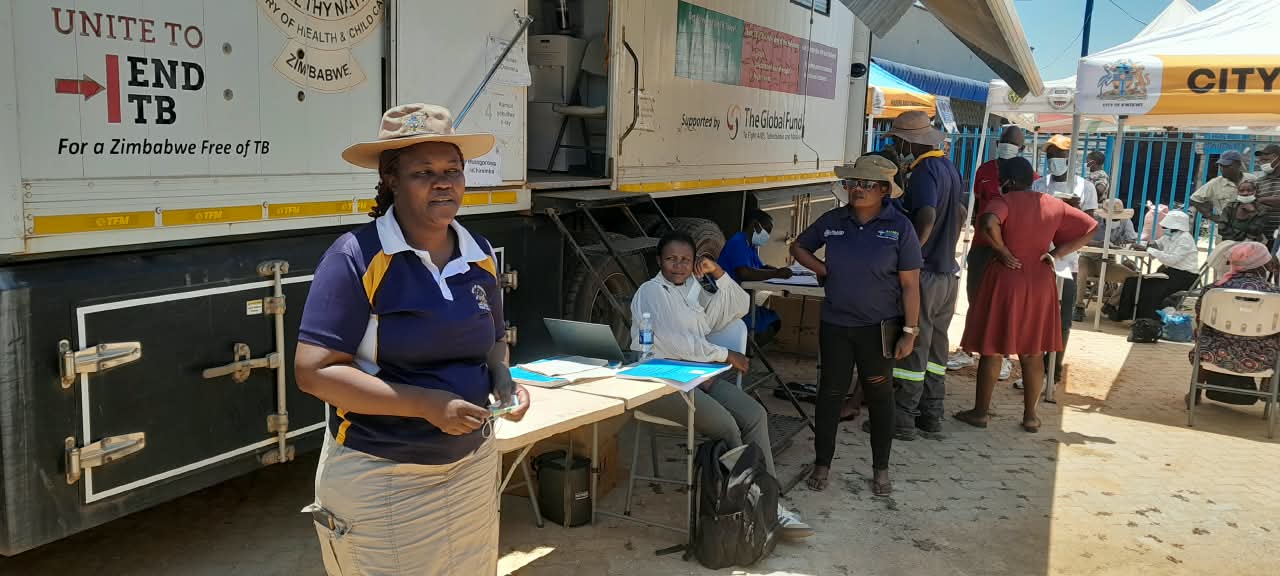
Speaking to journalists on the sidelines of a TB and silicosis screening programme at Mbizo 15 shopping centre Kwekwe City Council environmental health officer and TB coordinator Zvichauya Muvango said the response to the screening programme had been encouraging, with miners and women turning up for testing and health education.
The exercise, which offers free chest X-rays, is being conducted by Kwekwe City Council and the Ministry of Health and Child Care, with support from partners including Zimbabwe Health Interventions (ZHI) and the National AIDS Council.
“We are happy about the number of people who are responding to the call for screening. In terms of screening, the miners are coming up, the artisanal miners are coming up for screening, and they are accepting the message of silicosis prevention and control,” Muvango said.
She said the programme was important for Kwekwe, a mining community where health authorities had identified a significant number of silicosis cases that remained undiagnosed.
Besides TB and silicosis screening, the exercise includes HIV testing, diabetes screening, blood pressure checks and health education.
Muvango said the participation of women was also encouraging, attributing it to increased awareness of the importance of early screening, diagnosis and disease prevention.
She said the programme followed an awareness campaign conducted in the city about a month ago, which included a march led by Kwekwe mayor Cllr Albert Zinhanga and a silicosis conference at Kwekwe Polytechnic.
The campaign sought to raise awareness of the dangers of silicosis and promote preventive measures among miners and the wider community.
Muvango said silicosis was incurable but could be prevented and its progression controlled through appropriate protective measures, including the use of protective clothing and wet drilling to minimise exposure to silica dust.
However, she said authorities still needed to establish whether mine owners, particularly those operating in artisanal mining areas, were implementing the recommended safety measures.
“What is now left is for us to go down to the mining areas to check the response of the mining community and the mine owners. Are they actually implementing the control measures that we are educating them about, or are we just screening people here?” she said.
Muvango said the screening exercise would help health authorities reach people who might otherwise remain unaware of their condition, while follow-up engagements with mining operators would be important in strengthening prevention efforts.
She said official statistics from the exercise would be consolidated after the programme concluded in Kwekwe, before the screening team moved to peri-urban areas.
Muvango said the final figures would be verified against the screening registers to establish the number of people reached.
The exercise is part of broader efforts by health authorities and their partners to improve early detection of TB and silicosis and promote safer practices in the mining sector.
Meanwhile, speaking to journalists on the sidelines of a donation of essential baby supplies by Kwekwe mayor Cllr Albert Zinhanga to two mothers who gave birth to triplets at the hospital, the medical superintendent Dr Tinashe Gunda said screening programmes targeting silicosis and TB were gaining momentum in the district and province, with miners responding positively to calls to undergo testing.
He said regular screening was important because silicosis increases the risk of developing TB, adding that another screening programme was scheduled for the following week.
“We are so happy because the community of miners is responding very well. They are coming in their numbers for the screening,” he said.
Dr Gunda encouraged miners who had not yet undergone screening to come forward for early detection and management of the conditions.
He said health education programmes were also being conducted to equip miners with knowledge of safe working practices to reduce their exposure to silica dust.
However, he said it was too early to determine whether the interventions had reduced the number of patients requiring hospital admission.
“We have not yet seen the changes in terms of the numbers of patients who are being admitted because this is the programme that is just starting, but I am sure and confident that in a few months’ time we may see the change coming up,” he said.