

By Memory Mudzani
Mining remains one of Zimbabwe’s key economic sectors, contributing significantly to gross domestic product (GDP), export earnings and employment.
However, concerns are growing over the environmental damage associated with both large-scale and artisanal mining activities.
Environmental experts and government officials have warned that irresponsible mining practices have contributed to land degradation, deforestation, water pollution and the proliferation of open pits, raising concerns about sustainable development.
In the Midlands Province, some rivers, including the Sebakwe, Kwekwe and Gweru rivers, have been affected by pollution linked to mining activities.
The use of chemicals such as mercury in some gold mining operations has also raised concerns over water quality and public health.
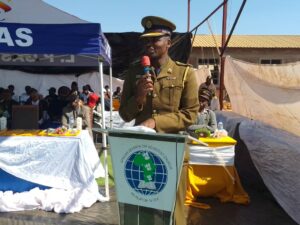
Speaking at a World Day to Combat Desertification and Drought commemoration in June 2024, Midlands Minister of State for Provincial Affairs and Devolution Owen Ncube said irresponsible mining along the mineral-rich Great Dyke had contributed to environmental degradation.
“Our province has not escaped the challenges of land degradation, desertification and drought due to irresponsible mining along the Great Dyke, which has left vast tracts of land scarred with open pits, posing threats to both people and livestock,” he said.
According to the Forestry Commission of Zimbabwe, mining activities, particularly gold and diamond mining, contribute to deforestation, with an estimated 200,000 hectares of forest cover reportedly lost annually.
The Ministry of Mines and Mining Development has also reported that a significant proportion of mining operations leave land unsuitable for agricultural production if rehabilitation measures are not undertaken.
The Environmental Management Agency (EMA) has previously raised concerns over contamination of water bodies in some mining areas through chemicals and heavy metals, warning that this threatens aquatic ecosystems and communities that rely on rivers for domestic and agricultural use.
Residents of Silobela interviewed by The Public Eye said they were concerned about open pits left behind by mining activities in their area.
The residents called on relevant authorities to ensure that mining companies rehabilitate mined-out areas by covering open pits and restoring the land to reduce environmental degradation and improve public safety.
Environmental management, including land rehabilitation and compliance with mining regulations, remains a key issue as Zimbabwe seeks to balance economic growth from mining with the protection of natural resources and the wellbeing of affected communities.