

By Staff Reporter
Kwekwe Finance committee chairperson Cllr Alex Senge has raised concern over increasing cases of Sexually Transmitted Infections (STIs) in the city, urging health authorities and community leaders to strengthen awareness and intervention programmes.
Speaking during a full council meeting, Senge said Kwekwe recorded 458 STI cases in the latest reporting period, up from 390 cases recorded the previous month.
He said women accounted for the highest number of reported infections, with 238 cases compared to 220 among men.
“We have about 458 cases of STIs in Kwekwe as compared to the previous month where it was 390, where the females were leading with 238 and males 220,” said Senge.
He questioned health officials on measures being taken to curb the spread of infections, particularly in the GTS area, which he said was widely believed to be contributing a significant number of cases.
“Chairperson, what action are you doing in the community? Like I said, the most talked about is the GTS area where it is believed most cases are coming from,” he said.
Senge urged authorities to intensify public education campaigns and improve access to treatment services in affected communities.
“What are you doing to educate these people? If possible, you must find ways on how to treat people around this area,” he said.
He warned that failure to contain the rise in infections could worsen the situation in coming months.
“Today, you are saying 458, maybe next month it will be 600. In the end, we will be getting reports of STIs in this house if we let cases rise,” said Senge.
Supporting the concerns, Edumakomborero Mlambo said some residential properties in Amaveni were allegedly being used for prostitution and alcohol abuse involving young people.
“I want to support Cllr Senge. As professionals, we must hear what the Director of Health has just said. We live in the communities,” said Mlambo.
“In Amaveni, there are houses that are known to be operating as brothels. There are young girls who stay there. Some houses are turned into lodges or brothels.”
Mlambo said he had received complaints from residents over children allegedly skipping school and engaging in risky behaviour.
“Children leave their homes carrying satchels on the pretext of going to school and later take off their school uniforms at certain houses and start drinking alcohol,” he said.
He also alleged that some houses were harbouring large groups of young people and expressed frustration over what he described as limited police intervention.
“As a councillor, I get the reports and talk about these issues with the community. The police has proved to have failed to help deal with these issues,” said Mlambo.
He warned that such activities could damage the city’s reputation and undermine efforts to attract investment and visitors.
Responding to the concerns, Munyaradzi Murwira cautioned against linking the increase in STI cases to GTS area without evidence.
“I want to correct this conception that most cases of STIs are emanating from GTS. There is no evidence about this,” said Murwira.
“I think it’s not proper to stigmatise students at the college by saying they are behind the rise in STIs because we have other things that contribute to STIs.”
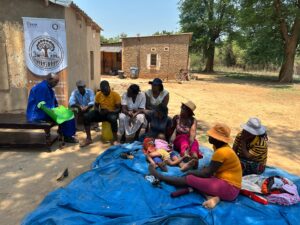
Murwira said the city health department, working with the National AIDS Council and other stakeholders, conducts awareness campaigns targeting students and communities.
“Normally when the college opens, we do awareness campaigns at the college in conjunction with the National AIDS Council and other stakeholders so that we educate the new students on prevention and general information about STIs, HIV, drug and substance abuse,” he said.
He added that community outreach programmes were also being carried out together with the Department of Social Welfare to educate residents on STIs and other health-related issues.
“We have programmes and we will continue to strengthen the programmes,” said Murwira.