
By Flata Kavinga
Midlands Minister of State for Provincial Affairs and Devolution, Owen Ncube, has hailed sport as a powerful weapon in the fight against drug and substance abuse, urging communities to use collective action to rid society of the scourge.
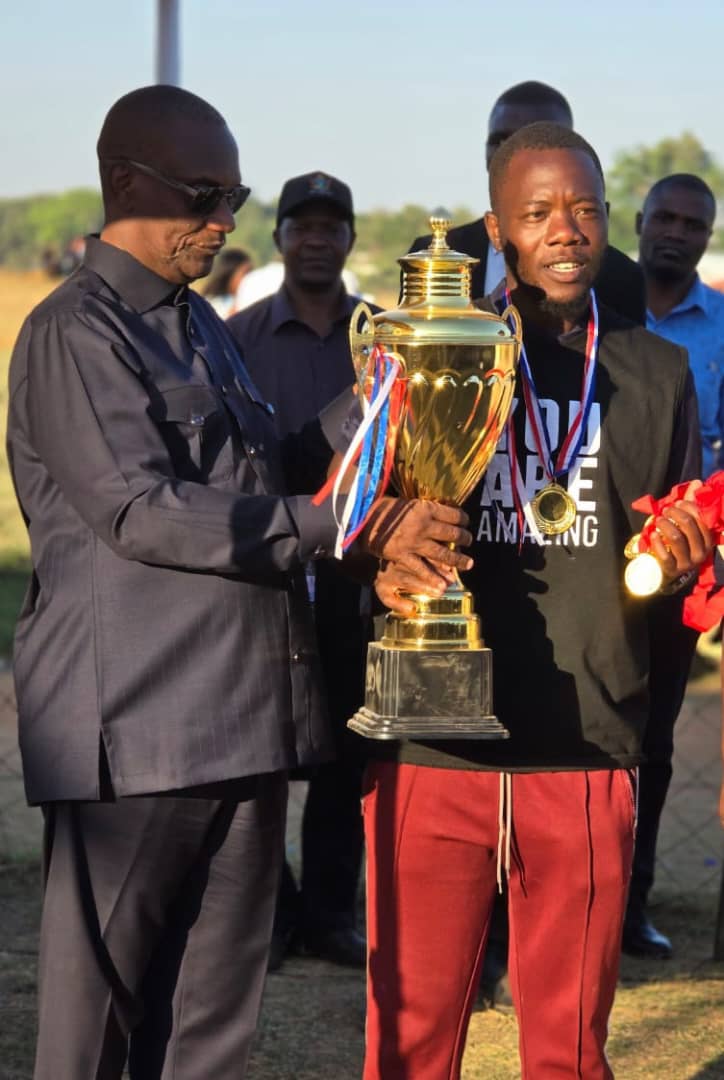
Speaking at Mbizo Stadium in Kwekwe during the 2nd Edition of the Kwekwe City Mayor’s Challenge Cup Tournament, Ncube said the event’s theme — “Breaking the Chains: Prevention, Treatment and Rehabilitation for All – Encourage Open Communication about Drug and Substance Abuse” — reflects Government’s strong commitment to combating drug and substance abuse across the country.
He said the Midlands Province fully supports President Emmerson Mnangagwa’s multi-sectoral approach, which includes the establishment of an Inter-Ministerial Committee to coordinate national efforts, the identification of rehabilitation centres in every district, and the enactment of Statutory Instrument 62 of 2025, which bans new illicit brews such as musombodhiya and kambwa.
“The province commends His Excellency’s robust institutional and regulatory frameworks aimed at eliminating drug and substance abuse,” Ncube said. “Through the Supply Reduction Pillar, we have dismantled 73 known drug bases in the Midlands and arrested 386 peddlers.”
The minister applauded Kwekwe City Council, led by Mayor Councillor Zinhanga, for organizing the tournament, which brought together 22 secondary schools, 12 primary schools and 16 out-of-school youth teams under one anti-drug campaign.
He also praised Kwekwe District Police (DISPOL) for their continued efforts in destroying drug bases and confiscating illegal substances such as dagga, bronco, and mutoriro, saying other districts should emulate Kwekwe’s example.
Ncube said sports can play a critical role in keeping youths occupied and inspired while opening pathways to professional careers. He noted that the Government, under President Mnangagwa’s leadership, has established the Ministry of Sport, Recreation, Arts and Culture to nurture talent and promote sport as an economic opportunity in line with the National Development Strategy 1 (NDS1).
“Sport is now a multi-billion-dollar industry and an effective strategy in the fight against drug and substance abuse,” he said. “It keeps youths engaged and helps them focus on productive activities.”
The minister also commended First Lady Dr. Auxillia Mnangagwa for her continued role in rehabilitating victims through the Angel of Hope Drug and Substance Abuse Rehabilitation Centre in Mbare, which offers medical care, counselling, and skills training.
He further applauded the City of Kwekwe for establishing the Amaveni Drug and Substance Abuse Centre, which is now operational and offering outpatient services to affected individuals.
Ncube described Kwekwe as a drug abuse hotspot that has seen rising cases of violent crime, school dropouts, and health-related challenges linked to substance use. He urged learners to stay away from drugs such as crystal meth (mutoriro), tsunami, and ganja cakes, which have found their way into schools.
“As I conclude,” Ncube said, “I urge all citizens to adopt the Whole-of-Government, Whole-of-Society, and Whole-of-Economy approach in the fight against drug and substance abuse. Let this tournament be a shining example of how sport can unite and inspire us toward a drug-free future.”
The Kwekwe Mayor’s Challenge Cup, now in its second year, continues to grow as a major youth engagement platform promoting discipline, talent development, and social responsibility through sport.