

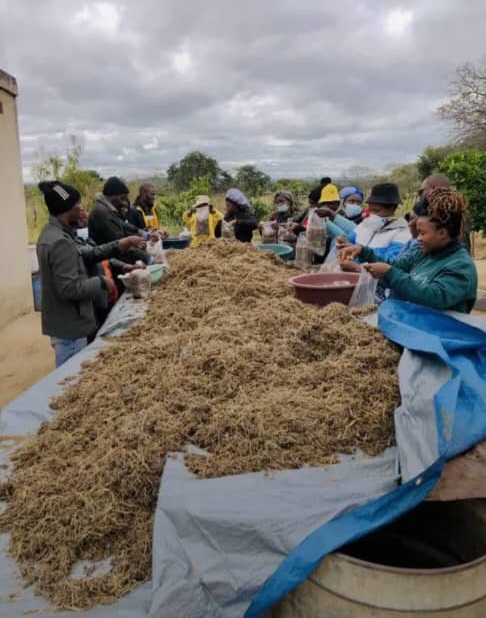
By Memory Mudzani
Mushroom farming is emerging as a potentially lucrative and low-capital agribusiness that could contribute to economic growth and agricultural diversification in Zimbabwe, a Bulawayo-based agronomist has said.
In an interview with this publication, agronomist Mtokozisi Tsuma said mushroom production offers farmers an opportunity to generate income using limited land and locally available agricultural waste.
Tsuma said farmers can adopt sustainable and circular agriculture techniques by using materials such as wheat straw, maize stalks and cotton waste to cultivate high-protein mushrooms.
“Farmers can increase economic opportunities through sustainable mushroom production, processing and marketing. They can make more per kilogramme with less input by using agricultural waste such as wheat straw, cotton waste and maize stalks,” said Tsuma.
He said mushroom farming has the potential to contribute to Zimbabwe’s economy through the sale of fresh and dried mushrooms, as well as value-added products such as umami powder made from dried oyster mushrooms mixed with salt and garlic.
According to Tsuma, such products could create market opportunities in the hospitality sector, including hotels and restaurants.
Tsuma also said farmers in remote areas can start oyster mushroom farming using low-technology methods that do not require electricity.
He said growers can source spawn from local producers, including institutions and incubation hubs in Harare and Bulawayo, as well as suppliers in neighbouring South Africa.
He called on agricultural extension services to strengthen training programmes in rural communities.
“There is a need for Agritex to train farmers at ward level to become spawn multipliers. This would improve access to spawn in grassroots communities while creating additional income opportunities through mushroom farming,” he said.
Tsuma added that farmers should first receive adequate training in mushroom production before being taught spawn multiplication techniques.
He said the Ministry of Agriculture and the Agricultural and Rural Development Advisory Services (Agritex) should scale up technical training programmes on production management and post-harvest handling.
“Agritex should multiply mother spawn and sell it to farmers at cost in order to reduce dependence on commercial suppliers,” said Tsuma.
Tsuma further suggested that Agritex offices, particularly in rural areas, establish demonstration mushroom houses to encourage adoption by local farmers.
“Farmers often learn better from practical examples and what they can physically see,” he said.
He also urged government agencies to assist mushroom farmers in accessing documentation required for duty-free imports and tax rebates through the Zimbabwe Revenue Authority (ZIMRA), saying this could help farmers import inputs and expand export opportunities.