

By Flata Kavinga
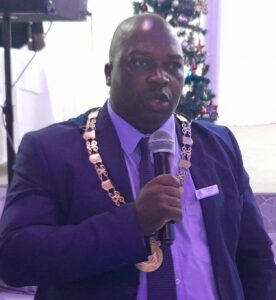
The Kwekwe City Council is set to enter into a public-private partnership with a Harare-based company to rehabilitate its aging water distribution network, Mayor Albert Zinhanga has said.
Speaking to journalists shortly after a full council meeting, Cllr Zinhanga said the local authority had resolved to partner the company to replace old asbestos pipes with polyvinyl chloride (PVC) pipes in phases across the city.
“As council we will continue to treat and maintain our water. We are not going to surrender the water purification process,” he said. “The company will focus on replacing the old water reticulation system from the water treatment plant up to households.”
He said the first phase would cover Amaveni, Mbizo 1 and Mbizo 2, where the entire water reticulation system would be removed and replaced. The project would then move to Mbizo 15 before extending to other suburbs, guided by the age and condition of existing infrastructure.
Cllr Zinhanga said the deal would be structured under a Public-Private Partnership (PPP) model and would require approval from the Ministry of Local Government and Public Works before implementation.
“We have already engaged the company and they did their presentations. We are now waiting for a directive from the Ministry. Once the Minister signs, the work will commence,” he said, adding that he anticipated the agreement could be finalised this month.
The mayor said the project had been provided for in the council’s 2026 budget. Initially, council had intended to undertake the rehabilitation using its own resources before opting to bring in a private partner.
Under the proposed arrangement, the company would recoup its investment through water charges over an agreed period, potentially 10 years, before handing over the infrastructure to council.
“We are secure as a city. We are not giving them any money. After the agreed period, they will hand over the equipment to council,” Cllr Zinhanga said.
He said the city was currently losing significant volumes of treated water through leakages in the old network.
“Say if we produce 70 megalitres, probably 50 megalitres reach residents, meaning we lose 20 megalitres as non-revenue water,” he said.
According to the mayor, the company has undertaken similar projects in South Africa and other regional countries and uses technology capable of detecting water losses.
He also said the partnership would not result in an increase in water tariffs, as council would remain responsible for water treatment and maintenance.