
By Memory Mudzani
Artificial Intelligence (AI) is transforming lives in Zimbabwe, and people with disabilities are no exception.
In an interview with the Public Eye, Amor Zimbabwe Trust project officer Joseph Tsvayi said that AI-powered tools are enhancing accessibility, creating new opportunities, and promoting inclusivity. From assistive technologies to inclusive education, AI is revolutionizing how people with disabilities live, work, and interact.
“AI has great potential to improve inclusivity in education, healthcare and public services for people with disabilities in Zimbabwe by reducing barriers related to communication, access and personalized support,” said Tsvayi.
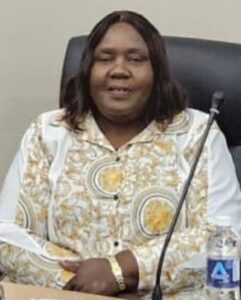
Senator Annah Shiri, who represents Persons with Disabilities (PWDs) in Zimbabwe said that artificial intelligence is not merely a technological trend but a vital bridge to the full citizenship promised by the National Artificial Intelligence Strategy (2026–2030) and the Persons with Disabilities Act of 2025.
“AI acts as a force multiplier for inclusivity in the education sector by making it easier for our children with disabilities to learn, especially in our context where resources are often limited. AI is changing that by introducing technologies that facilitate learning for people with disabilities,” said Senator Shiri.
She noted that AI has localized voice-to-text features that assist visually impaired students in accessing their assignments and listening to digitized textbooks.
“We advocate for AI models to be trained in Shona and Ndebele dialects, allowing visually impaired students to dictate assignments or listen to digitized textbooks in their mother tongue,” said Senator Shiri.
She added that AI-driven avatars translate spoken Shona or Ndebele into Zimbabwe Sign Language (ZSL) in real-time for the deaf community, bridging the gap where human interpreters are unavailable.
“Artificial intelligence also offers adaptive learning platforms like Luma Learn, which is already being piloted. It adjusts lesson difficulty based on a student’s cognitive needs, ensuring that learners with intellectual disabilities are not left behind by a rigid curriculum,” said Senator Shiri.
However, Tsvayi cautioned that while AI is a boon for the disability community, it presents significant accessibility barriers in Zimbabwe. These include limited internet access, especially in rural areas and the high costs of premium AI services and data bundles, which limit access for those who need it most.
“Most PWDs struggle to secure decent meals each day, making it difficult to prioritize internet access over food, which presents a barrier to accessing AI technologies,” said Tsvayi.
Senator Shiri echoed Tsvayi’s concerns, stating that despite discussions about the promising future of AI, many PWDs in areas like Epworth, Binga, or Chipinge find AI tools to be as distant as the stars due to the digital divide in Zimbabwe. The high cost of data remains a significant obstacle.
Tsvayi urged network providers to make data more accessible by reducing costs. He also expressed the hope that the government would introduce free internet hubs in rural areas, enabling the disability community to access AI technologies.