
By Admire Chitsungo
Home Affairs and Cultural Heritage Minister Kazembe Kazembe has challenged provincial drug and substance abuse committees to deliver measurable results on the ground, warning that the success of government’s anti-drug campaign cannot be judged by the number of meetings and workshops held.
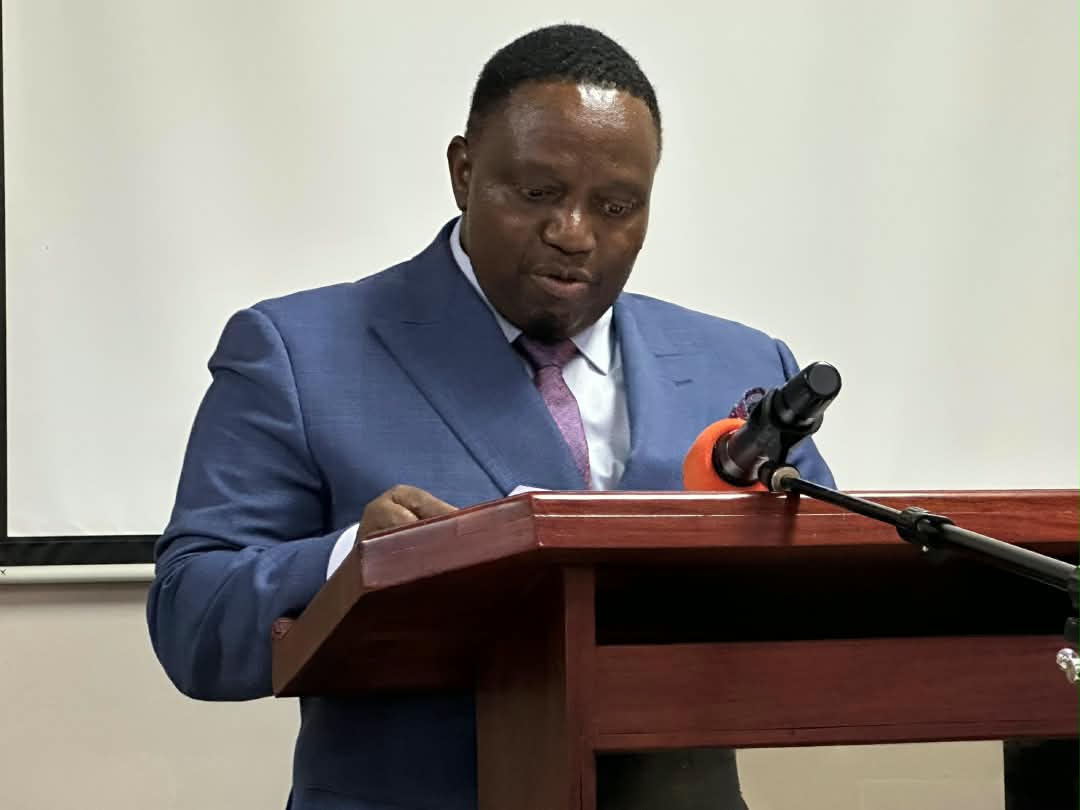
Speaking on Monday while officially opening a three-day training programme for five provincial committees at Kadoma Rainbow Hotel, Minister Kazembe urged delegates to develop practical action plans that translate national policies into tangible community interventions.
The training, which ran from 5 to 7 October, brought together stakeholders from Mashonaland West, Midlands, Masvingo, Matabeleland North and Matabeleland South as government moves to strengthen the implementation of its national response to drug and substance abuse.
Representing Defence Minister Oppah Muchinguri-Kashiri, chairperson of the National Committee on Drug and Substance Abuse, Minister Kazembe said provincial structures must demonstrate the impact of their work through improved access to prevention, treatment and rehabilitation services.
“Training should not end when participants leave this venue,” he said.
He challenged the committees to develop implementation plans outlining responsibilities, resource requirements, partnerships and measurable indicators of progress.
Minister Kazembe said drug and substance abuse remained a multifaceted challenge affecting public health, families, education, community safety and the country’s socio-economic development, requiring coordinated action across government and society.
“Drug and substance abuse is not a challenge that can be addressed by one ministry or organisation, one profession or one intervention in isolation,” he said.
He called for stronger collaboration among government departments, law enforcement agencies, schools, families, traditional and religious leaders, civil society, the private sector, the media and development partners.
The minister said provincial committees were strategically positioned to coordinate these efforts and ensure that interventions addressed the specific needs of their communities.
He also urged the committees to map available treatment and support services, establish effective referral systems and identify gaps that could prevent people affected by substance abuse from accessing assistance.
Provincial structures, he said, should know where services were available, who provided them, whom they served and how individuals could be referred for appropriate care.
Minister Kazembe further called for greater emphasis on prevention, early intervention, treatment, rehabilitation and reintegration, saying the response should go beyond law enforcement.
“Behind every statistic is a person, a family and a community,” he said, emphasising the need for interventions that preserve the dignity of people affected by substance abuse.
He also urged service providers to uphold confidentiality, ethical standards and professional conduct while ensuring the welfare of personnel working with vulnerable individuals and families.
The minister said the provincial committees must return to their respective areas and translate the training into coordinated programmes, resource mobilisation, improved service delivery and accountable reporting.
“What we require is not parallel programming but a coordinated national response in which each institution understands its mandate and contributes to a shared result,” he said.
The training is anchored on the Zimbabwe Multisectoral Drug and Substance Abuse Action Plan (2024–2030), which provides a framework for interventions covering supply and demand reduction, harm reduction, treatment and rehabilitation, psychosocial support, community reintegration, communication, policy and legal issues and resource mobilisation.
Government has been rolling out training for provincial structures, with five provincial committees trained in 2024 and another trained this year, according to Minister Kazembe.
He said the ultimate measure of success would be whether vulnerable people received timely assistance, families and communities accessed support and people recovering from substance abuse were helped to rebuild their lives.
“Let us transform coordination into action, policy into programmes and programmes into measurable improvements in the lives of our people,” he said.
The training was attended by Mashonaland West Minister of State for Provincial Affairs and Devolution Marian Chombo, Public Health Advisor to the President and Cabinet Dr Agnes Mahomva, secretary for Public Service, Labour and Social Welfare Pfungwa Kunaka, provincial authorities and other stakeholders.